


Nano Brows vs Microblading: Which Is Right for You?
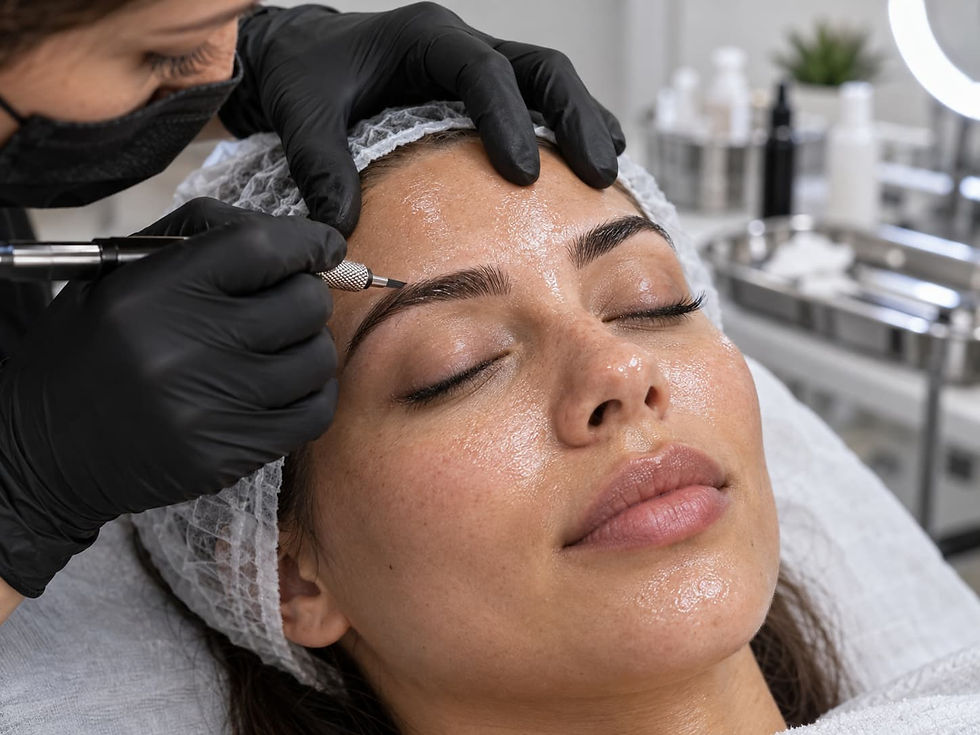
Nano brows use a digital machine to tap pigment into the skin, whereas microblading uses a hand-held blade to slice pigment in. That single tool choice affects how your brows heal, how long they last, which skin types they suit, and how easily they can be adjusted or removed later.
This guide compares the two techniques across the five differences that matter most, walks through who each one suits, covers who should skip both, and answers the questions most people bring to a consultation.
If you are considering microblading in Mississauga, ON, call Alternative Laser Health at (905) 451-4545.
The Main Differences Between Microblading and Nano Brows
Microblading and nano brows differ in the tools used, the appearance of healed strokes, healing time, longevity, and cost. Understanding these differences can help you choose the technique that best suits your skin type, aesthetic goals, and budget.
Microblading Uses a Manual Blade, While Nano Brows Use a Digital Machine
Microblading:
Uses a handheld blade to create hair-like strokes manually.
Allows the artist to vary the width, depth, and taper of each stroke.
Produces highly customized strokes that closely resemble natural eyebrow hairs.
Nano Brows:
Uses a digital machine with a fine needle to implant pigment.
Maintains consistent depth and speed throughout the procedure.
Produces uniform, precise strokes with less variation between individual hairs.
Microblading Creates Crisper Hair Strokes, While Nano Brows Produce a Softer Finish
Microblading:
Creates sharp, well-defined hair strokes with crisp edges.
Delivers one of the most realistic "natural brow" appearances.
Ideal for clients who want maximum hair-stroke definition.
Nano Brows:
Produces softer, slightly more diffused hair strokes.
Creates a gentle, natural-looking finish rather than ultra-crisp lines.
Appeals to clients who prefer a softer brow appearance.
Nano Brows Heal with Less Visible Flaking, While Microblading May Produce Slightly More Scabbing
Microblading:
Creates fine cuts in the skin using a manual blade.
Healing typically takes 10 to 14 days and may involve light scabbing.
Proper technique helps minimize skin trauma and promotes even healing.
Nano Brows:
Creates tiny punctures instead of cuts using a digital machine.
Healing generally takes 7 to 10 days with lighter flaking.
Healing results depend more on the artist's technique than the tool itself.
Nano Brows Last Longer, While Microblading Usually Requires More Frequent Touch-Ups
Microblading:
Lasts 12 to 18 months before a colour boost is recommended.
Longevity depends on skin type, aftercare, sun exposure, and skincare products.
May fade more quickly on oily skin.
Nano Brows:
Lasts 18 months to 2 years, with some results lasting up to 3 years.
Machine-implanted pigment tends to remain more evenly distributed in the skin.
Often provides longer-lasting results, especially for oily skin types.
Nano Brows Costs More Than Microblading
Microblading:
Costs $250 to $600 per session in Mississauga.
Usually requires a perfecting session 6 to 8 weeks after the initial appointment.
Some clinics include the touch-up in the treatment price, while others charge separately.
Nano Brows:
Costs $400 to $800 per session in Mississauga.
Higher pricing reflects the specialized equipment and advanced training required.
As with microblading, always confirm whether the touch-up appointment is included in the quoted price.
Which One Is Right for You?
Three factors determine which technique will hold up best on your face: your skin type, the finish you want, and how much maintenance you're willing to do.
Your skin type
Normal to dry skin: Microblading is a strong fit. Skin that doesn't produce excess oil holds blade-deposited pigment cleanly, so strokes stay crisp and defined for the full 12 to 18 months. Nano brows also work well on this skin type, but microblading gives sharper stroke definition.
Oily skin: Skip microblading. Excess sebum pushes pigment out of blade channels and causes strokes to blur into a solid line within months. Nano brows, ombré powder, or a combination brow are the better bets, since machine-deposited pigment holds more evenly in oily skin.
Sensitive skin: Both techniques can work, but nano brows tend to cause less inflammation because they don't cut the skin. A pigment patch test 24 to 48 hours before the session is worth requesting if you have a history of skin reactions.
Mature skin: Nano brows are usually the safer choice. Aged skin is thinner and more prone to blade trauma, and healed microblading strokes can spread more easily on skin that has lost elasticity.
The finish you’re looking for
Crisp, natural hair strokes: Microblading is best. No other technique matches the definition of a well-executed blade stroke.
Soft, diffused hair strokes: Go for nano brows. The tapping action produces a slightly softer edge that reads as gentler on the face.
A blend of definition and shading: A combination brow, which layers hair strokes and shading in the same session.
Maintenance
Microblading needs a colour boost every 12 to 18 months to stay looking crisp. Nano brows can hold for 2 years or more before a touch-up, depending on skin type and habits. Fewer appointments over time are one of the strongest arguments for nano brows.
What Is Microblading?
Microblading is a semi-permanent cosmetic tattoo technique that uses a hand-held tool fitted with a small manual blade to make tiny cuts in the upper layer of the skin and deposit pigment into those cuts.
Blades hold 10 to 15 micro-needles arranged in a U-shape or slanted row, with individual needle diameters of 0.30 to 0.50 millimetres, roughly twice as thick as the single needle used for nano brows. Each stroke mimics a natural eyebrow hair, and a skilled artist can vary the width, taper, and direction of every stroke by adjusting hand pressure.
Microblading suits normal or dry skin types and delivers the sharpest, most defined hair-like strokes of any brow tattoo method.
What Are Nano Brows?
Nano brows are semi-permanent cosmetic tattoos. They are made using a digital permanent makeup machine fitted with a single ultra-fine needle, typically 0.18 to 0.25 millimetres in diameter, to deposit pigment into the upper layer of the skin.
The needle taps at a controlled rate and consistent depth, creating individual hair-like strokes with even spacing. Common configurations use 1R or 1P cartridges with a built-in safety membrane that prevents pigment backflow into the machine. Nano brows tend to suit clients with oily, sensitive, or mature skin, or anyone wanting a softer, more diffused finish than blade-based techniques produce.
Who Should NOT Get Nano Brows or Microblading
Both techniques are safe for most healthy adults, but a good permanent makeup artist will still turn some clients away. Certain conditions make healing, pigment retention, or safety too unpredictable to risk.
Medical reasons to wait or skip entirely:
Pregnancy and breastfeeding. Hormones change how skin holds pigment, and no cosmetic tattoo has been clinically studied for safety during pregnancy. Most Canadian studios ask that you wait until at least 3 months after weaning.
Autoimmune conditions like lupus, Crohn's disease, rheumatoid arthritis, or Sjögren's syndrome. When the immune system is compromised, healing gets unpredictable, and pigment often refuses to settle.
Active chemotherapy or radiation. You will need written clearance from your oncologist, and most artists will ask you to wait until treatment is finished.
Diabetes that isn't well controlled. Higher infection risk and slower healing make it a poor bet.
HIV, hepatitis B or C, and other transmissible blood conditions. Both for your safety and the artist's.
Heart conditions involving a pacemaker. The epinephrine in numbing agents can affect heart rhythm.
Bleeding disorders such as hemophilia or Von Willebrand's disease. If you bleed excessively, the pigment cannot settle in the skin.
Epilepsy. Studio lighting and sitting still for a long procedure can be a seizure trigger for some people.
Medications that get in the way:
Blood thinners such as warfarin, high-dose aspirin, or heavy fish oil supplements, unless your doctor has signed off.
Accutane (isotretinoin) taken in the last 6 to 12 months. Your skin stays thin and reactive well after your final dose.
Botox in the brow area. Give it 2 weeks before or after your appointment.
Dermal fillers in the brow area. Give it 4 to 6 weeks on either side.
Topical retinoids, glycolic acid, or vitamin C serums on the brow area in the last 2 weeks before your appointment.
Skin issues in or near the brows:
Active rosacea, eczema, psoriasis, or dermatitis anywhere near the brow area.
A history of keloid scarring. The risk of raised scar tissue is not worth the cosmetic result.
Any active infection, a cold sore breakout, or an unhealed skin injury.
Very oily skin with visibly large pores. Pigment tends to spread, and strokes blur. A machine-based ombré or powder brow usually holds better.
Sunburn, chemical peels, microneedling, or laser resurfacing on the brow area that hasn't fully healed yet.
Moles, raised lesions, or piercings in the brow area that the artist would need to work around.
Age:
Anyone under 18. No reputable Ontario studio will do cosmetic tattooing on a minor, and parental consent does not change that.
If you already have brow tattoo work:
Heavy or dark pigment from an older microblading, ombré, or PMU session. Placing new strokes over old ink turns the healed result muddy, and the artist loses control of the final colour. Laser removal comes first, then fresh work, usually with 6 to 12 months between the last removal session and the new appointment.
What If You Change Your Mind Later?
Both techniques can be removed or covered, but the pigment used at the original appointment decides how easy or expensive that removal will be. Choosing an artist who uses laser-removable pigment protects the option to change course later.
Pigment quality varies widely. Older-generation permanent makeup relied heavily on iron-oxide pigments, which oxidize when hit with laser energy, temporarily turning black and requiring extra sessions to clear. Modern hybrid pigments from established permanent makeup brands like Perma Blend, Li Pigments, Tina Davies, and Evenflo are formulated to break down more predictably under laser removal.
Health Canada regulates tattoo inks and permanent makeup pigments as cosmetics. Its 2022 to 2023 testing of 30 cosmetic pigment products led to 3 stop-distribution orders and 23 correction commitments, so pigment quality is not a small detail.
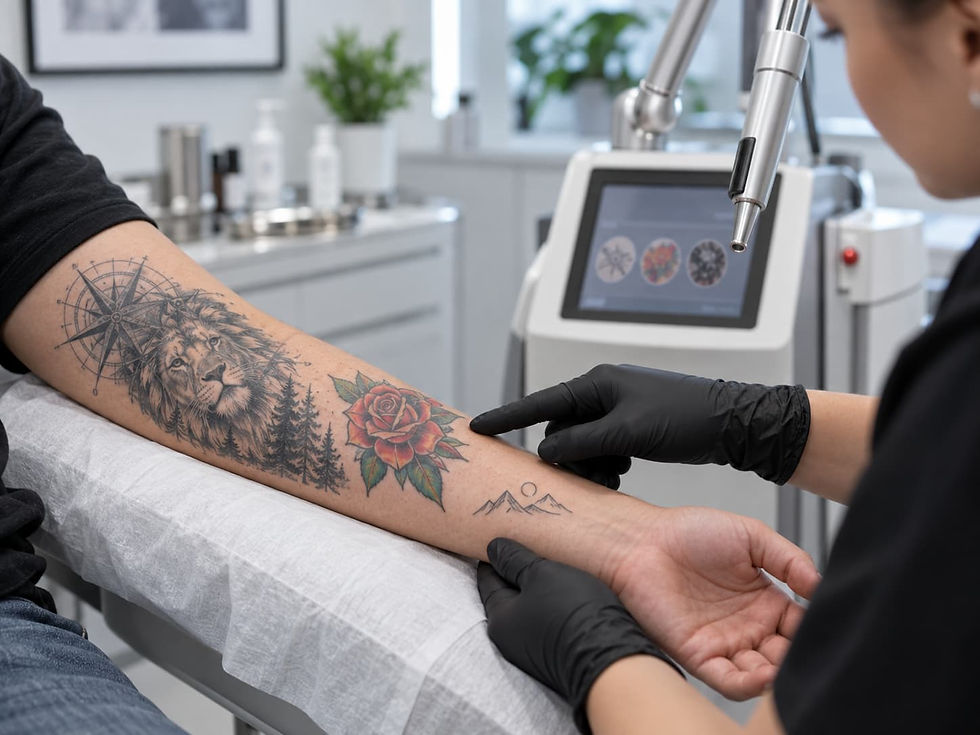
Picosecond lasers like PicoWay and PicoSure use ultra-short pulses at multiple wavelengths to shatter pigment into particles small enough for the lymphatic system to clear. The 532 nm wavelength targets red and orange pigments, 785 nm targets blue and green tones, and 1064 nm reaches deeper black and brown. Q-switched Nd: YAG lasers work on the same principle with longer pulse durations, which is why picosecond systems have become the standard for permanent makeup removal.
Ask any artist under consideration what pigment brand they use, where it is manufactured, and whether it is known to respond well to laser removal.
How to Choose a Permanent Makeup Artist
The technique matters less than the person holding the tool. A skilled microblading artist will outperform an unskilled nano brows artist every time, so vetting the artist is the highest-leverage decision in this whole process.
Ask for photos taken at the healed stage, ideally with the same lighting and angle as the fresh work, not fresh work alone. Any technique looks sharp on the day of the appointment, but what also matters is how the strokes settle after 6 to 8 weeks.
Check credentials and regulatory compliance. In Ontario, permanent makeup studios operate under Ontario Regulation 136/18, the Personal Service Settings Regulation under the Health Protection and Promotion Act, which came into force on July 1, 2018. The regulation sets standards for infection prevention, equipment sterilization, sharps disposal, and client record-keeping. Local public health units inspect studios for compliance and post inspection results publicly. Recognized training and certification bodies for permanent makeup artists include the Society of Permanent Cosmetic Professionals, PhiBrows Academy, and the American Academy of Micropigmentation. Ask which body trained the artist and when they completed their most recent continuing education.
Ask about pigment brands. Reputable studios use pigments from established suppliers with published safety data and known laser-removal behaviour. Established permanent makeup pigment brands include Perma Blend, Li Pigments, Tina Davies, and Evenflo. If an artist can't name the brand they use, or dodges questions about ingredients, keep looking.
Inspect the studio. Single-use cartridge needles or disposable microblading blades, sealed pigment cups, gloves changed between clients, sharps disposed of in a biohazard container, and autoclave sterilization of any reusable tools are non-negotiable. A clean studio is the minimum bar, not a bonus.
Book a consultation before booking the appointment. A good artist will assess skin using the Fitzpatrick scale to guide pigment selection, discuss goals, review any past brow work, and be honest about candidacy. If someone books an appointment immediately without a proper consultation, that's a warning sign.
Book an Appointment at Alternative Laser Health to Get Microblading in Mississauga, ON
Alternative Laser Health offers microblading in Mississauga, performed by a trained permanent makeup artist who tailors the shape and colour to your face.
During your free consultation, we'll look at your skin, your natural brow hair, and any past work, and then we'll recommend the technique that will hold up best.
Choosing the right brow treatment is easier when someone honest walks you through your options. Call (905) 451-4545 or book a free consultation today!
FAQs
Which lasts longer, nano brows or microblading?
Nano brows usually last longer than microblading. Nano brows hold for 18 months to 3 years, while microblading typically fades within 12 to 18 months. Longevity depends on your skin type, sun exposure, and skincare routine, and oily skin fades both techniques faster than dry skin.
Can either technique be removed if I change my mind?
Yes, both microblading and nano brows can be removed with a picosecond laser like PicoWay, which shatters pigment into particles the body clears through the lymphatic system. Most clients need 2 to 6 sessions spaced 6 to 8 weeks apart, though heavily saturated work can take more. Home removal methods like saline, salt scrubs, and topical creams can scar the skin and are not recommended.
How painful is each technique?
Both are done under topical numbing cream and are usually described as mildly uncomfortable rather than painful. Microblading tends to feel like light scratching. Nano brows feel more like a small vibration or repeated tapping. Numbing is reapplied during the session, and clients on their menstrual cycle or with low iron often report higher sensitivity, so timing your appointment can help.
Can I get microblading or nano brows if I have scarring or previous brow trauma?
It depends on the type of scar. Flat, mature scars can often be tattooed over successfully, but raised, keloid, or very fresh scars usually cannot, because pigment does not deposit evenly into scar tissue and can migrate. Nano brows are generally more forgiving on scarred skin than microblading because the machine can adjust depth around uneven texture, but a proper in-person assessment is the only reliable way to know.
Do these techniques work on very sparse or fully missing brows?
Yes. Both techniques can build a full brow from scratch, but the approach differs. Microblading on a completely bare brow can look "drawn on" if too many strokes are placed without underlying hair to break them up, so a combination brow providing strokes plus soft shading is often the better choice for very sparse or bald brows. Nano brows can also be combined with shading for the same reason. Full alopecia clients often get the most natural result from ombré powder or combination techniques rather than pure hair strokes.
What happens at the 6 to 8 week perfecting session?
The initial appointment places the shape and pigment, but the healed result is rarely 100% final. Colour can look patchy, uneven, or lighter than expected once the skin fully heals. The perfecting session, done 6 to 8 weeks later, is when the artist fills gaps, adjusts colour, refines the shape, and sets the final result. Skipping this appointment is the single most common reason clients feel unhappy with their brows.
Can I work out, swim, or wear sunscreen after the appointment?
Not for the first 10 to 14 days. Sweat, chlorine, and salt water can lift pigment out of the healing channels and cause patchy fading. Direct sun exposure fades pigment prematurely and can cause colour shift. Once fully healed, daily SPF 30 or higher on the brow area is the single best thing you can do to keep results looking crisp for as long as possible.
How much does microblading cost in Mississauga?
Microblading in Mississauga generally costs between $250 and $600 per session. At Alternative Laser Health, microblading is $280 and a microblading + ombré powder combination brow is $325. There are no forced packages, so you pay per session, and the free consultation gives you a clear quote before any work begins.

Comments