


Best Methods for Tattoo Removal Based on Tattoo Type
Laser is the best tattoo removal method for almost every tattoo. The top choice is a picosecond laser like PicoWay or PicoSure. But choosing the right tattoo removal method depends on your tattoo's ink colours, its type, and your skin tone.
At Alternative Laser Health in Mississauga, ON, we remove tattoos of all colours and sizes with advanced laser technology.
Call us on (905) 451-4545 or book a free assessment session online today
Tattoo Removal Methods at a Glance
There are a few ways to remove a tattoo, but they are not equal. Laser is the standard because it clears ink without cutting the skin. The rest are used only in special cases.
Laser removal: the gold standard. A laser breaks ink into tiny particles that your body clears on its own. It works on most colours, sizes, and skin tones.
Surgical excision: a surgeon cuts out the tattooed skin and stitches it closed. It works only on small tattoos and always leaves a scar.
Dermabrasion: a rotating tool sands off the top layers of skin. It is painful, less precise, and carries a higher risk of scarring, so it is rarely used today.
Saline removal: a saline solution lifts pigment out of the skin. It is slower and less predictable, and it is used mostly for small cosmetic tattoos like microblading.
Creams and home methods: these don't reach the ink deep in your skin, so they don't work. They can irritate or scar the skin. Skip them.
Laser is the most common method today, and the other options are more invasive and used far less often.
Best Tattoo Removal Method by Tattoo Type
The best method comes down to your ink colour, your tattoo type, and your skin. In most cases, the answer is a picosecond laser, but the wavelength and plan change with each tattoo. Here is the best approach for each type.
Black Ink Tattoos
Laser at 1064 nm is best for black ink, and black is the easiest colour to remove. It absorbs every laser wavelength, so it breaks down quickly and clears in the fewest sessions. A thin black outline goes faster than a solid black fill, and dense professional black may need extra passes. A picosecond laser like PicoWay shatters black ink into fine particles, so your body clears it faster.
Red and Warm-Colour Tattoos
Laser at 532 nm is best for red, orange, and other warm colours. This wavelength is absorbed strongly by warm shades, so they respond well and usually clear soon after black. Pink and light purple often fall in this group too. Both our PicoSure and PicoWay lasers deliver 532 nm.
Green and Blue Tattoos
Green and blue are stubborn and need shorter red-light wavelengths, around 694 to 755 nm. These colours reflect the wavelengths used for black, so an older single-wavelength laser often leaves them behind. Our PicoSure at 755 nm and PicoWay at 730 and 785 nm target green and blue directly, though they still take more sessions than black or red.
Yellow and White Tattoos
Yellow and white are the hardest colours to remove and may not fully clear. Yellow reflects most laser light, so it responds slowly. White and light pigments can darken instead of fade, because the laser can react with the pigment. We check these inks and may do a test spot before treating, and we set honest expectations from the start.
Multicoloured Tattoos
Multicoloured tattoos need a multi-wavelength picosecond laser that switches wavelengths to match each colour. No single wavelength clears every colour, so a system like PicoWay, with four wavelengths, can treat the whole piece. These tattoos take the longest because each colour is removed on its own.
Amateur Tattoos
Laser clears amateur tattoos in fewer sessions. Amateur ink is usually lighter, shallower, and often a single colour, so it breaks down faster. The method is the same as for any tattoo, just a shorter plan.
Professional Tattoos
Laser is best for professional tattoos, though they take more sessions. Artists pack ink deeply and evenly, so there is more pigment to clear. A picosecond laser handles dense, saturated ink well and reduces the risk of skin damage.
Old and New Tattoos
Laser works on both, but age changes the plan. Older ink has already begun to fade as your immune system breaks it down over the years, so it often needs fewer sessions. A new tattoo should heal for at least 6 weeks before you start removal, so the skin can settle first.
Small and Large Tattoos
Laser is the best choice at any size. For small tattoos, surgical excision is possible but leaves a scar, so most people choose laser. For large tattoos and full sleeves, excision is not practical, and laser can treat any area of the body, one section at a time.
Cover-Up Fades
If you want new art over an old tattoo, laser lightening is the method. You do not need full removal, just enough fading for a new design to sit cleanly on top. This usually takes only a few laser sessions, far fewer than complete removal.
Cosmetic Tattoos and Microblading
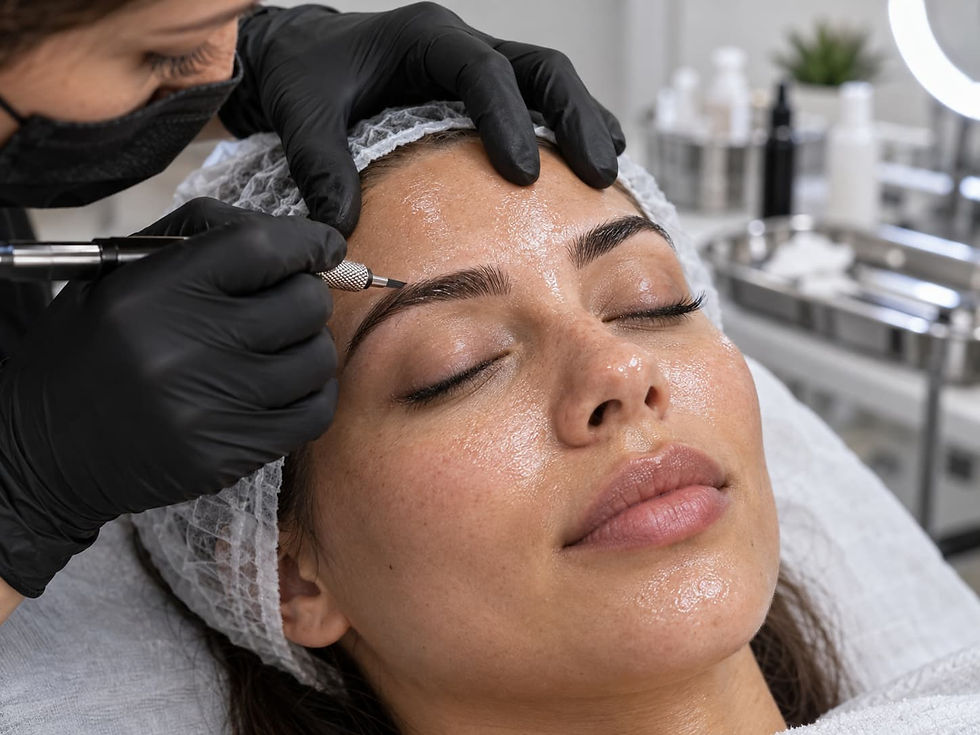
Some clinics use saline removal for cosmetic tattoos and microblading, since brow and lip pigments can darken under a laser. Laser also works, but we must check the pigment first, because flesh tones and white can oxidize and turn darker. We offer laser microblading removal for old or unwanted brows, and we assess the pigment before we treat.
Tattoos on Dark Skin
Laser at 1064 nm is the safest choice for darker skin. This longer wavelength goes deeper and is absorbed less by melanin, so more energy reaches the ink and less reaches your skin. To protect your skin tone, we use gentle settings, a larger spot size, a test spot, and extra time between sessions, which lowers the risk of light or dark patches.
How Different Laser Wavelength Match Your Ink Colour During Removal
Different ink colours absorb different wavelengths of laser light, measured in nanometres, or nm. Matching the right wavelength to your ink is what makes removal work.
Black and dark blue ink respond to 1064 nm. This longer wavelength also goes deeper and is the safest choice for darker skin.
Red, orange, and warm colours respond to 532 nm.
Green and blue ink are stubborn and need shorter red-light wavelengths, around 694 to 755 nm.
Yellow and white are the hardest. Yellow reflects most light, and white can darken instead of fade, so it needs a careful, expert assessment first.
Two kinds of lasers deliver these wavelengths:
Q-switched lasers, the older standard, fire in nanoseconds (billionths of a second) and mostly use heat.
Picosecond lasers fire in trillionths of a second and shatter ink with pressure, not just heat. They break ink into finer particles, so your body clears it in fewer sessions with less risk to your skin. This is why picosecond systems are the 2026 standard.
In 2026, a few newer techniques speed removal up even more:
Multi-pass methods, such as the R20 method, treat a tattoo more than once in a single visit for faster fading.
A perfluorodecalin, or PFD, patch lets the laser make several safe passes in one session.
Better multi-wavelength systems now handle stubborn colours like green and blue more effectively.
How to Choose a Safe Tattoo Removal Clinic
The best method only works in skilled hands. Look for:
An FDA-cleared or Health Canada licensed picosecond laser, not a hair-removal laser.
A trained technician who matches the wavelength to your ink and skin.
A patch test for darker skin or unusual ink.
Honest, realistic session estimates.
Be careful with clinics that push large prepaid packages or promise full removal in only a session or two.
Our Tattoo Removal Methods in Mississauga
At Alternative Laser Health, we focus on laser removal, the safest and most effective method for almost every tattoo. We use two advanced picosecond systems and match the wavelength to your ink and skin.
Laser tattoo removal: our core service, matched to your tattoo's colour and your skin tone.
PicoSure laser tattoo removal: a picosecond laser at 755 nm, with an optional 532 nm, that clears green, blue, and black ink in fewer sessions.
PicoWay laser tattoo removal: a picosecond laser with four wavelengths of 532, 730, 785, and 1064 nm for many colours and skin tones, including darker skin.
We also use laser for cosmetic and microblading removal. We do not offer surgical excision, dermabrasion, or saline removal.
We Offer the Best Tattoo Removal Method at Alternative Laser Health
The best tattoo removal method depends on your ink colours, your tattoo type, and your skin tone, and for almost everyone, that method is a picosecond laser.
At Alternative Laser Health in Mississauga, we match PicoSure and PicoWay to your tattoo for safe, effective removal. If you are still weighing your options and want a tattoo removal method that works best for you, our trained tattoo artists are always happy to help.
Call (905) 451-4545 to book a free consultation and get an expert opinion on the best method for you.
Frequently Asked Questions
What is the best tattoo removal method?
Laser is the best method for almost every tattoo. It clears ink without cutting the skin and works on most colours and skin tones. Picosecond lasers are the top choice in 2026.
What is the best method for coloured tattoos?
A multi-wavelength picosecond laser. Different colours need different wavelengths, so a system that switches between them, like PicoWay, clears colour best.
What is the best method for tattoo removal on dark skin?
Use a 1064 nm laser with gentle settings and a test spot. This wavelength is absorbed less by melanin, lowering the risk of pigment change.
Do tattoo removal creams work?
No. Creams cannot reach the ink deep in your skin. They may irritate or scar the skin without removing the tattoo.
Can you remove a tattoo without laser?
Yes, but the options are limited. Surgical excision suits only small tattoos and leaves a scar. Saline is used mostly for cosmetic tattoos. Laser is safer and works on far more tattoos.


Comments